Codec Systems
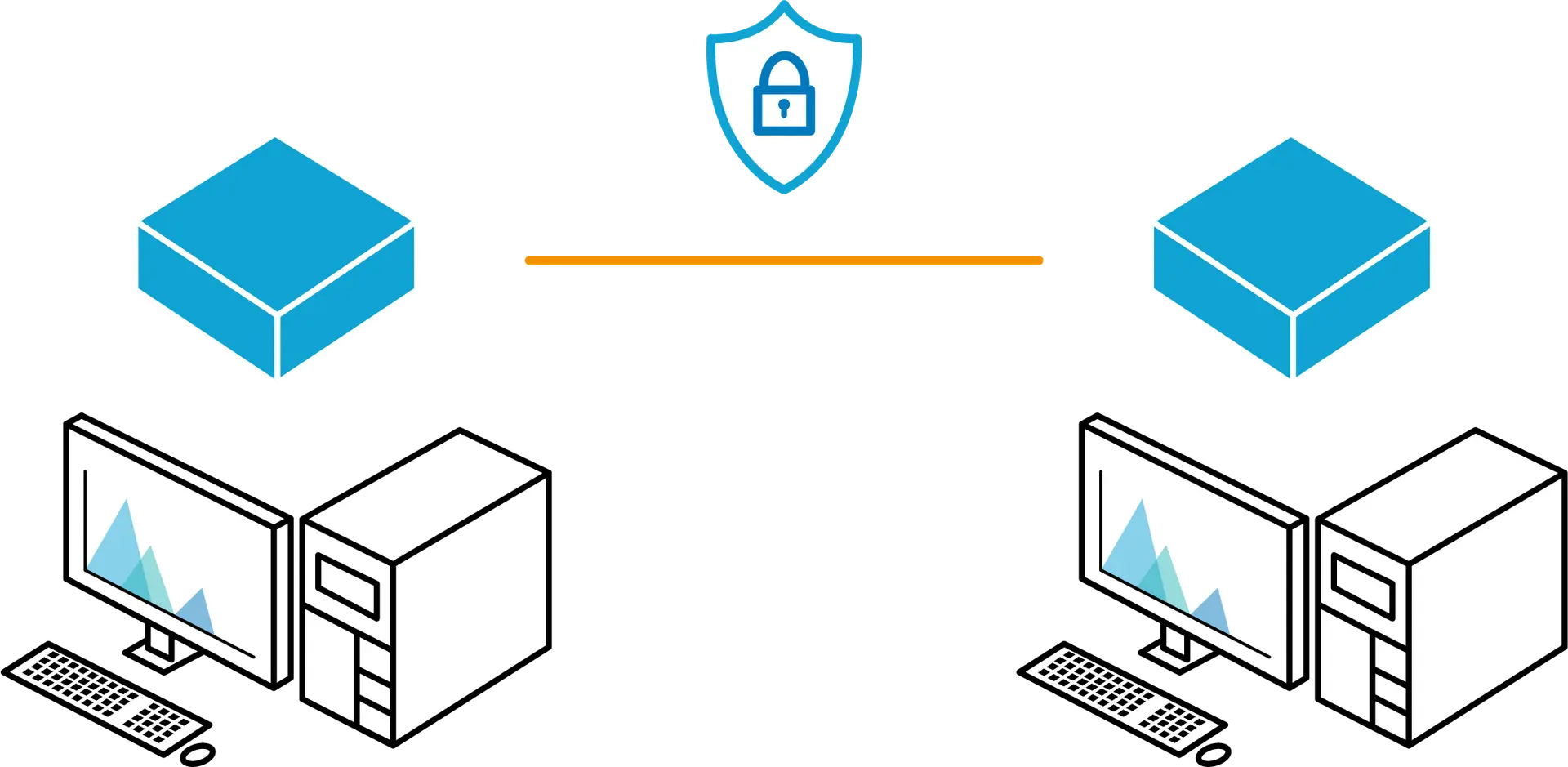
A codec (compressor-decompressor) is a technology that compresses digital audio and video for transmission and converts it back into a usable signal upon reception. Codecs are crucial within radio, television and AV workflows, as they can efficiently transmit large amounts of data over networks such as IP, fibre-optic or the internet. Without codecs, unprocessed audio and video signals would require too much bandwidth, making live broadcasts, remote contributions and multi-site workflows practically impossible.
Codec solutions
Depending on the type of signal, the desired latency and the available network bandwidth, different codecs can be used. Video codecs compress frames and the movements between frames to reduce file size whilst maintaining image quality. Audio codecs focus on the efficient transmission of audio signals with minimal delay and optimal sound quality. Professional workflows often combine both to distribute audio and video synchronously and reliably.
Video codecs
Audio codecs compress digital audio signals so that they can be transmitted efficiently over a network. By using codecs, audio signals can be distributed with minimal latency and optimal quality.
H.264 (AVC)
H.264, also known as MPEG-4 AVC, is one of the most widely used video codecs in broadcasting and streaming. This codec uses block-based compression, whereby only the changes between consecutive frames are stored. This makes H.264 efficient and widely compatible, making it the standard choice for live broadcasts and streaming where reliability is important.
H.265 (HEVC)
H.265, or High Efficiency Video Coding (HEVC), is the successor to H.264 and offers approximately twice the compression efficiency. This allows the same quality to be achieved at half the bitrate, or higher quality at the same bitrate. HEVC supports high resolutions up to 8K, higher frame rates, HDR and a wider colour gamut, making it ideal for modern streaming and high-resolution broadcast with limited bandwidth.
ProRes and DNxHD/DNxHR
Intraframe codecs such as Apple ProRes and Avid DNxHD/DNxHR are of great importance for production and post-production. As each frame is compressed individually, these codecs are ideally suited for editing, colour grading and live production workflows where both latency and image quality are of paramount importance. Many professional systems and broadcast servers support these codecs because they maintain high quality without artefacts during editing.
JPEG XS
JPEG XS is a specialised codec designed for professional live production and AV-over-IP workflows. It combines ultra-low latency with visually lossless compression, enabling studio-to-studio feeds and live camera feeds to be processed synchronously and in real time. This codec is frequently used in professional broadcast environments where minimal delay is crucial.
AV1
AV1 is a next-generation, royalty-free video codec that offers significantly higher compression efficiency than older standards such as H.264 and HEVC. This makes AV1 particularly suitable for streaming high resolutions, such as 4K and 8K, and for modern platform distribution. Although AV1 is not yet widely adopted in much broadcast hardware, its adoption is growing rapidly, particularly within OTT and web-based workflows.
Audio codecs
Audio codecs compress digital audio signals so that they can be transmitted efficiently over networks, with minimal latency and optimal quality. In professional broadcast environments, a distinction is made between lossy, lossless and uncompressed audio, depending on the required quality and application.
AAC
AAC (Advanced Audio Coding)
AAC is a lossy codec that removes redundant and less audible parts of an audio file to reduce its file size. It delivers higher sound quality at lower bitrates than older standards such as MP3 and is widely used in radio broadcasts, streaming platforms and mobile applications. AAC supports both speech and music as well as multi-channel audio, making it suitable for stereo and surround sound productions.
Opus
Opus is a modern, royalty-free codec that dynamically adapts to the available network bandwidth. It supports both speech and music and offers very low latency, making it ideal for live remote feeds, AoIP systems and real-time communication within studio and broadcast networks.
PCM
PCM (Pulse Code Modulation)
PCM is an uncompressed audio signal that stores every sample exactly as it is, without any loss of quality. It is regarded as the standard in studio environments and is used in recording, editing and professional broadcasting where maximum audio fidelity is required. Although PCM does use a lot of storage space and bandwidth, it guarantees that no audio information is lost.
FLAC en ALAC
Lossless codecs such as FLAC and ALAC preserve all the original audio information, but store it more efficiently than uncompressed PCM. They are widely used for archiving, mastering and situations where audio must be fully preserved for later editing or distribution, striking a balance between high quality and reduced storage space.
How do you choose the right solution?
Selecting a suitable codec begins with an analysis of the workflow and technical requirements. Factors such as desired latency, available network bandwidth, the number of locations to be connected, and the nature of the connection—whether temporary or permanent—play a key role. For mobile or remote applications, flexibility and low latency are essential, which is why a codec such as Opus is often preferred. For fixed studio-to-studio connections, hardware-based codecs offer reliability and continuity. AV workflows where audio and video must remain synchronised require integrated solutions such as JPEG XS or hardware solutions from brands such as Digigram, Telos Alliance or Lawo.
A carefully chosen codec ensures that connections remain reliable, audio and video quality is optimal, and that future infrastructure expansions can be easily implemented.

Why choose Triple Audio?
We offer:Tailored advice and system design
Configuration of software licenses
Integration into existing broadcast infrastructure
Installation and support
Ask for adviceAdvice and support
At Triple Audio, we help organisations choose the right configuration. We advise on the best solutions for your workflow, propose scalable setups and ensure a smooth implementation; we support you every step of the way.
Would you like to find out more or receive a configuration proposal?
Our engineers work with you to put together the right solution for your workflow.